Skip to content
Sale!

High-Speed Sliding-Mode Observer for the Sensorless Speed Control of a PMSM

Original price was: $60.00.Current price is: $30.00.

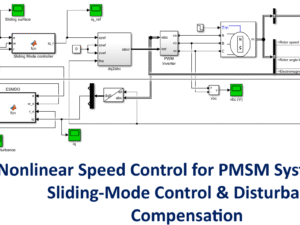
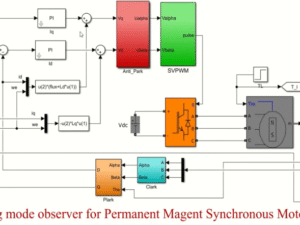
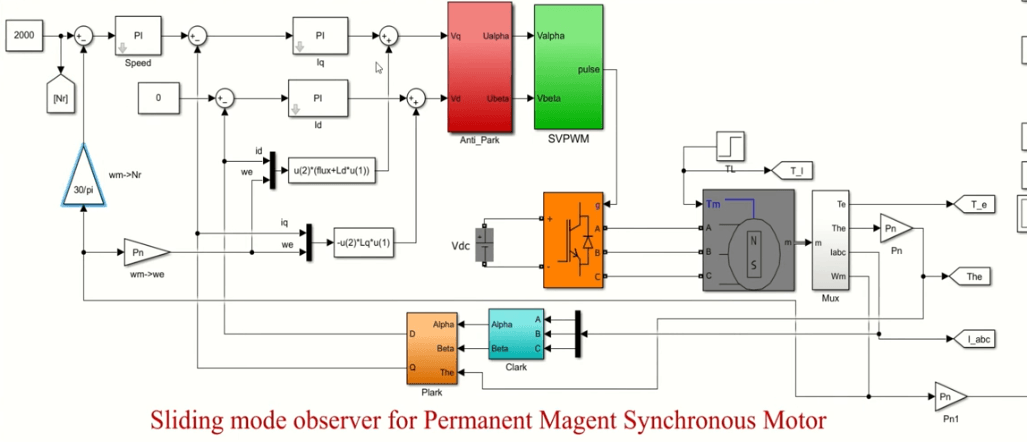
A sensorless speed control strategy for a permanent-magnet synchronous motor (PMSM) based on a new sliding-mode observer (SMO), which substitutes a sigmoid function for the signum function with a variable boundary layer. In order to apply a sensorless PMSM control which is robust against parameter fluctuations and disturbances, a high-speed SMO is proposed, which estimates the rotor position and the angular velocity from the back EMF. In the conventional SMO, a low-pass filter and an additional position compensation of the rotor are used to reduce the chattering problem that is commonly found in the SMO using the signum function. In order to overcome the time delay caused by the low-pass filter, in this research, a sigmoid function is used for the switching function instead of the signum function. Also, the variation in the stator resistance is estimated to improve the steady-state performance of the SMO. The stability of the proposed SMO was verified using the Lyapunov second method to determine the observer gain.
 

Add to Wishlist
Add to Wishlist
Wishlist

High-Speed Sliding-Mode Observer for the Sensorless Speed Control of a PMSM

A sensorless speed control strategy for a permanent-magnet synchronous motor (PMSM) based on a new sliding-mode observer (SMO), which substitutes a sigmoid function for the signum function with a variable boundary layer. In order to apply a sensorless PMSM control which is robust against parameter fluctuations and disturbances, a high-speed SMO is proposed, which estimates the rotor position and the angular velocity from the back EMF. In the conventional SMO, a low-pass filter and an additional position compensation of the rotor are used to reduce the chattering problem that is commonly found in the SMO using the signum function. In order to overcome the time delay caused by the low-pass filter, in this research, a sigmoid function is used for the switching function instead of the signum function. Also, the variation in the stator resistance is estimated to improve the steady-state performance of the SMO. The stability of the proposed SMO was verified using the Lyapunov second method to determine the observer gain.
 

Reviews

There are no reviews yet.

Be the first to review “High-Speed Sliding-Mode Observer for the Sensorless Speed Control of a PMSM”

Your email address will not be published. Required fields are marked *

Recent